
Introduction
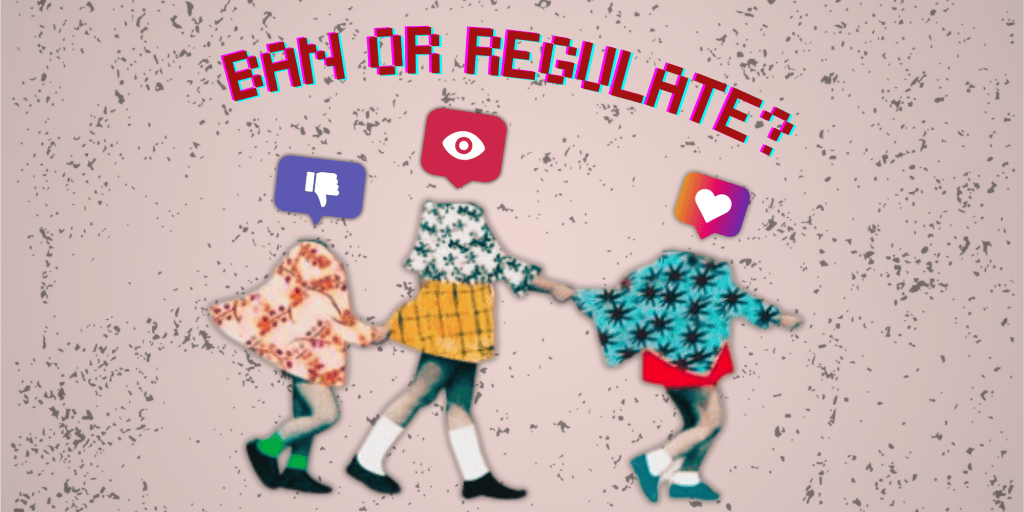
The rise of social media usage among children and adolescents has adversely impacted their mental, physical, and emotional health. Some of the harmful impacts of excessive social media use include depression, anxiety, ADHD, and social media addiction. Further, abusive content on social media may lead to aggressive behaviour and substance abuse among children and adolescents.
In response to these concerns, countries all over the world have started implementing regulatory measures. Australia, in 2025, became the first country in the world to ban social media for children and teenagers under the age of 16 years. Similarly, China has also imposed certain restrictions on social media usage by minors. More so, in India, states such as Karnataka and Andhra Pradesh are also considering imposing restrictions on social media usage among children and adolescents.
This blog will analyze the legal frameworks adopted by Australia and China regarding restrictions on social media for children and teenagers, along with their consequences. It will further examine how India can adopt a nuanced and effective approach while considering similar measures.
Australia’s Approach of a Complete Ban
On December 10, 2025, Australia became the first country in the world to ban children below the age of 16 from using particular social media platforms, including TikTok, X, Facebook, Instagram, YouTube, Snapchat, Reddit, Kick, Twitch, and Threads. The measure was introduced with the objective of safeguarding children and adolescents from the adverse effects of social media, including social comparison, cyberbullying, exposure to harmful or sexualized content, and other risks to their psychological well-being and online safety. As a result, several accounts were deactivated by the social media platforms in order to comply with the new law. However, the ban was not extended to platforms such as WhatsApp, YouTube Kids, and Google Classroom, nor to gaming and dating platforms. While these exclusions recognise the need to preserve access to communication and educational services, they also raise questions about the consistency and scope of a complete ban, particularly when children may still encounter similar online risks on platforms falling outside its ambit.
In order to implement this ban, the social media platforms have been asked to use various methods to identify the real age of the users, including government IDs, face recognition, voice recognition, behavioural conduct analysis, etc. However, this technology may incorrectly identify users, potentially restricting access for adults and causing disruptions. A few cases of incomplete compliance with the laws and orders by some social media platforms have also come to light. The government can introduce a fine of up to 49.5 million Australian dollars on social media platforms if found in violation of the new law. These fines, however, are also much lower than the platforms’ revenue per hour.
Another significant concern is about the protection of the enormous data of people that needed to be collected for the purpose of age verification. Although the government had strictly ordered the disposal of that data and severe penalties in the cases of breach, there still exists the risk of extensive digital surveillance.
Though the new law is a major step in reshaping minors’ use of social media platforms, its compliance and effective implementation remain challenging for the Australian government. eSafety, Australia’s internet regulator, has found that more than eight in ten Australians below the prescribed age continue to use social media platforms covered by the ban, with no significant change in the frequency of such use. Some children and adolescents have also reportedly created fake accounts or used their parents’ accounts to circumvent the restrictions. These developments highlight that a clear legal prohibition does not necessarily ensure effective compliance, particularly where users can circumvent age restrictions.
China’s Restrictive Approach
Unlike Australia’s strict prohibitionist approach, China has adopted a ‘restricted use’ approach. On 29 April, 2025, the Cyberspace Administration of China (CAC) launched the “Minor Mode” regulation. The “Minor Mode” includes several features designed to regulate usage. Once the mode is activated through a specific icon on compatible devices, it allows for content filtering, limits on usage time, control over applications, and monitoring of usage statistics. The mode establishes a uniform system that operates across mobile devices, applications, and app distribution platforms.
This mode imposes different time limits based on age. Children below the age of eight are restricted to 40 minutes of screen time daily, those between eight and sixteen are permitted up to an hour, and those above 16 are allowed up to two hours. However, educational applications are exempted from these time limits and filters are in place to show age-appropriate material. Minors also cannot access non- essential applications between 10:00 PM and 6:00 AM. This approach shows an attempt to reduce digital addiction while continuing access to educational content.
These regulations give the responsibility to ensure a safe and smooth digital experience to both companies and parents. Verification and approval through passwords, fingerprints, or facial recognition from a parent or guardian is needed to enter or exit the minor mode. Also, App Developers are required to integrate these features, including content filtering, time limits, and options to block interactions with strangers. These measures should be applauded for avoiding a blanket ban on social media use and instead focusing on reducing digital addiction and preserving access to beneficial content.
Despite the comparatively balanced structure, China’s “Minor Mode” has also raised many concerns. This mode poses privacy risks by collecting sensitive personal data, such as facial recognition and biometric information. At the same time, it also enables extensive parental surveillance, which allows parents to monitor and control the content accessed by minors. Additionally, the government’s role in determining what constitutes “appropriate” content raises concerns about restrictions on freedom of expression. This also limits the children’s exposure, as they would be confined to state-approved information. These features also raise concerns about the extent of parental and state control over minors’ online experiences. Since the system allows monitoring of internet use and regulates the content accessible to minors, excessive control could limit their exposure to diverse viewpoints and influence the information they receive. This creates a tension between the objective of ensuring a safe digital environment and the risk of excessive control over minors’ online experiences.
China’s approach therefore demonstrates that protecting minors does not necessarily require completely removing them from social media. Age-based restrictions, content controls and differentiated treatment of platforms can be used to reduce risks while preserving access to beneficial content. At the same time, the concerns relating to biometric data, parental surveillance and excessive control over content show that these measures cannot simply be transferred to India without appropriate safeguards.
Balanced Regulatory Approach for India
Australian and Chinese models offer important lessons for India as similar debates on minors’ social media use continue to emerge here as well. In India, the states of Karnataka and Andhra Pradesh are planning to ban social media for children and teenagers. However, this raises the question whether a central law would be more convenient than various state laws in this regard. A central law is more suitable mainly for three reasons: firstly, regulation of digital communication and online platforms mainly falls within the Union’s legislative domain under the Seventh Schedule of the Constitution. A central law could therefore provide a uniform legal framework for regulating minors’ media usage across the country. Secondly, varying state laws could create compliance and enforcement confusion for social media intermediaries operating across India. For example, Social media platforms may have to comply with different age limit requirements in different states, making consistent implementation difficult. Thirdly, states may also face technological difficulties in enforcing such restrictions. Effective enforcement would require adequate technological infrastructure, which may not be uniformly available across all states. Nevertheless, states should be consulted during the policy formulation so that the local concerns are properly considered.
Further, India should not adopt a complete ban on social media access for children and teenagers. A blanket prohibition would violate the fundamental rights under the Constitution. Social media is not merely a source of entertainment but also facilitates education, communication, access to information, etc.
There is currently no direct Indian judicial authority on the constitutionality of a blanket social media ban for children. However, existing decisions on internet access provide some relevant principles. In Anuradha Bhasin v. Union of India (2020), the Supreme Court recognised that freedom of speech and expression through the internet is protected under Article 19(1)(a) and it is subject to reasonable restrictions under Article 19(2). The Court also emphasised that any prohibition must be justified, necessary and proportionate to the objective sought to be achieved. Measures such as age verification, parental controls and content filters may offer more proportionate alternatives than a complete ban on social media for children.
Similarly, in Faheema Shirin v. State of Kerala (2019), the Kerala High Court recognised internet access as connected with the rights to education and privacy under Article 21. These principles support an approach that protects children from online harms while avoiding restrictions on their access to educational and informational content.
The Australian and Chinese approaches offer different lessons for India. Australia’s age-based restrictions provide a clear way of limiting children’s exposure to harmful content, cyber-bullying and excessive social media use. However, a complete restriction may not be suitable for India because it has a diverse population and socioeconomic disparities. There are wide disparities in digital literacy and awareness, which can be increased by cutting off marginalized adolescents from sources of education, information, and social connection. Unlike Australia, where digital access is relatively uniform, India has a major digital divide, especially between rural and urban areas.
China’s ‘Minor Mode’ takes a regulatory approach through age-based restrictions and limits on certain online activities. Some of these measures may be useful for India, but the Chinese model cannot be directly adopted because it raises concerns relating to privacy, surveillance and freedom of expression.
India can draw from China’s ‘Minor Mode’, particularly its age-based restrictions. Since this model has already been developed in China, adapting its existing framework could reduce the need to develop an entirely new regulatory mechanism. However, the model should not be adopted in its existing form. India should adopt a similar restrictive regulatory approach, but modify it according to its own conditions. The restrictions should be balanced with children’s need for access to education, information, and other age-appropriate content.
Apps should be classified based on their primary purpose and the risks involved. Algorithm-driven social media platforms and live-streaming services may require stricter restrictions due to risks such as addiction, cyberbullying and harmful content. Online gaming platforms with open chats or monetary interactions may also require safeguards. However, educational content should be accessible. It includes age-appropriate, accurate and reliable information that supports a child’s learning, health, safety or development. The educational content should not only be limited to academic or school related material. It should also be inclusive of sexuality education, health and safety information, child protection resources, and information on sexual orientation and gender identity. However, the information provided should be suitable for the child’s age and stage of development.
Strong data-protection safeguards should be introduced for personal data collected through age-verification mechanisms. These safeguards are also supported by the right to privacy under Article 21, as recognised in Justice K.S. Puttaswamy (Retd.) v. Union of India. The Court’s test of legality, legitimate aim and proportionality is relevant to age-verification mechanisms. Although protecting children from online harms is a legitimate aim, the method used for age verification must be necessary and proportionate to that aim.
Since age verification may require the large-scale collection and storage of children’s data, it can increase risks of surveillance, profiling, and data misuse by both state and digital intermediaries. India must therefore ensure strict data protection and impose heavy penalties on companies where such data is misused, breached, or inadequately protected.
Social media platforms therefore should only collect the data necessary for verification, use it only for that purpose, keep it secure, and delete it once the process is completed. This can be done in accordance with Sections 8(5) and 8(7) of the Digital Personal Data Protection Act, 2023, which deal with security safeguards and erasure. Further, due regard should be given to Section 9 of the Act, which particularly deals with additional protection for children’s data, including verifiable parental consent and restrictions on tracking and behavioural monitoring. Penalties under Section 72A of the Information Technology Act, 2000 are imposed for the disclosure of personal information obtained under a lawful contract without consent or in breach of that contract. This is particularly relevant where platforms or third-party age-verification providers receive personal information for verification purposes, as such information should not be disclosed or misused beyond the purpose for which it was collected.
Apart from these measures, there is a need for effective implementation. Companies should be provided a proper transition period to develop a proper regulatory framework as per the regulations. However, legal regulation alone may not be sufficient. The success of the framework will depend on digital literacy and public awareness. Parents and guardians should be given a proper understanding of these tools and restrictions. Therefore, large-scale awareness campaigns and educational initiatives must be undertaken to ensure active participation from families.
In conclusion, protecting children from the harms of social media requires regulation rather than a blanket ban. Although a complete ban may appear to be a simple solution, it may also restrict children’s access to education and information. India should therefore adopt a balanced regulatory model that places stricter controls on harmful content, excessive use, and high-risk platforms. However, formulating and implementing such a balanced approach requires attention to all the concerns discussed above, including age verification, privacy and data protection, access to education and information and platform accountability. These measures should also be supported by effective enforcement and greater digital awareness among children and guardians. The objective should not be to keep children away from the digital world, but to make that world safer without unnecessarily limiting the benefits it can provide.
Author
Namandeep Kaur
Batch 2023-2028, B.A. LL.B. (Hons.),
Rajiv Gandhi National University of Law, Punjab
Sanskriti Sharma
Batch 2023-2028, B.A. LL.B. (Hons.),
Rajiv Gandhi National University of Law, Punjab


Leave a Reply